Valves
Daisy Rotary Valve
Available on backorder
Free shipping on orders over $2500!
- Satisfaction Guaranteed
- No Hassle Refunds
- Secure Payments
- Pre-order items ship in 8 weeks
EU consumers: you have a legal guarantee of at least 2 years. Learn more
SKU: DMV-100
Category: Valves
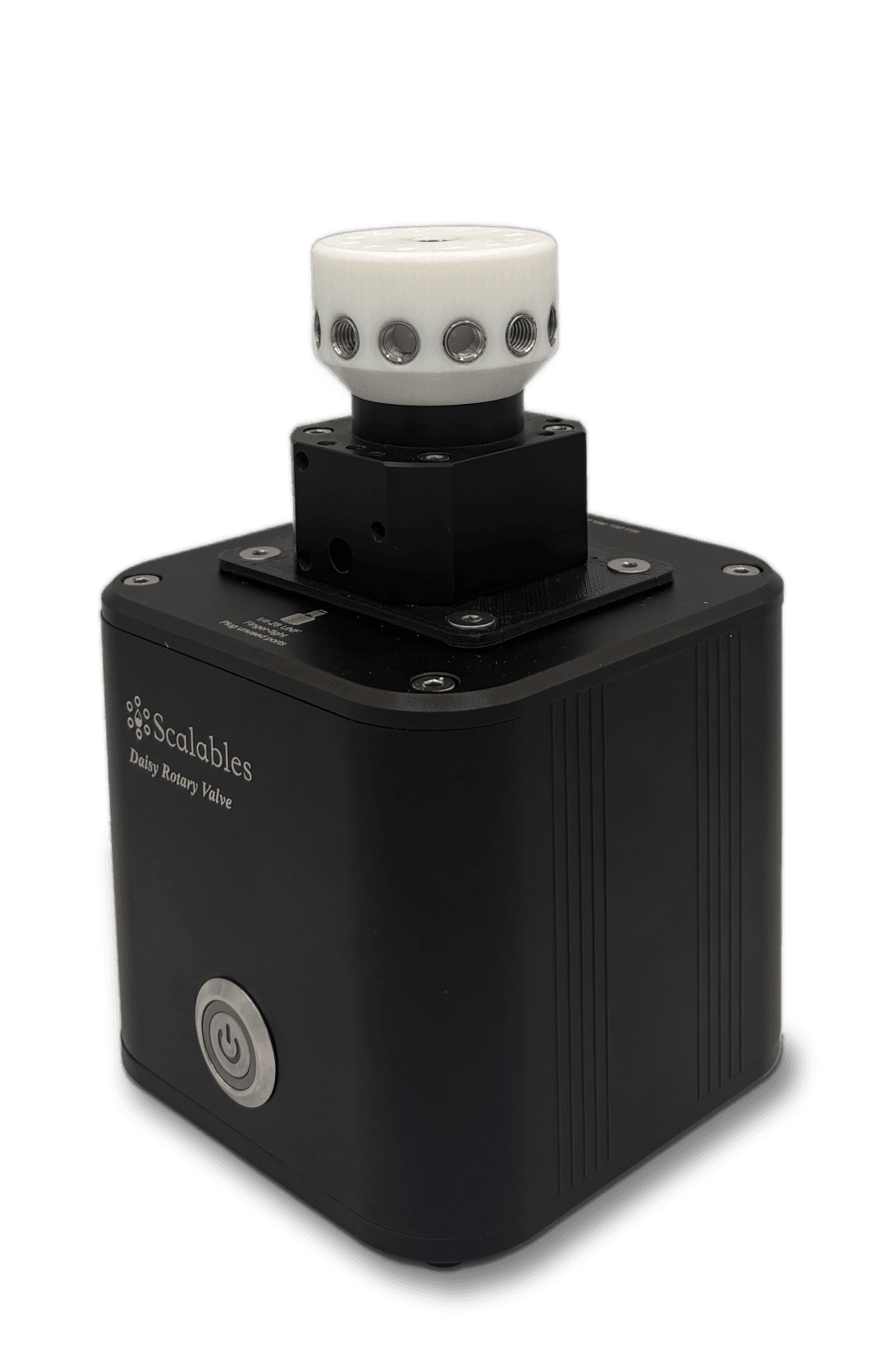
The Daisy Rotary Valve features a 12-channel rotary valve manufactured by BioChem Fluidics — part of ArcMed, a world-class supplier of fluidic systems solutions. The rotary valve is typically used for sample collection, flow path selection, or loop injection applications.
The valve’s outer head is made of polytetrafluoroethylene (PTFE), while the rotor inside is machined from chlorotrifluoroethylene (CTFE). Both materials are highly chemically inert, and there is no metal in the fluid path. This makes the valve ideal for aggressive and/or reactive fluids.
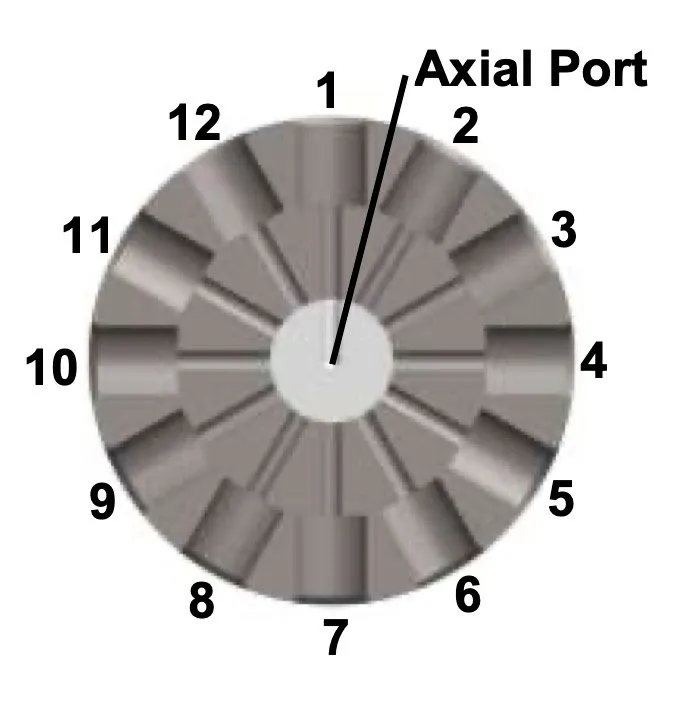
A common axial port on the valve head connects with a different radial port each time the rotor turns 30 degrees. A full rotation takes approximately one second, so switching between neighboring ports takes under 300 ms.
The Daisy Rotary Valve is ideal for applications where port switching does not need to occur frequently. A maximum duty cycle of one port-to-port move per second is recommended. Operating at or below this rate will extend the valve’s lifespan by minimizing friction-related wear.
The valve features easily flushed flow paths optimized for low internal volume. The default orifice size is 0.032″ (0.8 mm), matching PTFE tubing with the same internal diameter. Additional options include 0.052″ (1.32 mm) and 0.096″ (2.44 mm). Larger internal diameters are available for high-flow applications—simply contact us with your requirements.
Pressure drop across the valve can be estimated based on orifice size, flow rate, and travel distance (23 mm from radial to axial port). Using Hagen–Poiseuille equation, the upper bound is approximately 600 ml/min at 30 psi (1.37 L/min at 150 psi) for a 0.032″ orifice. For a 0.096″ orifice, estimates increase to 5.7 L/min at 30 psi and 12.7 L/min at 150 psi.
| Weight | 0.92 kg |
|---|---|
| Dimensions | 100 × 100 × 130 mm |
| Valve Volume |
Dead Volume: 0 µL Internal Volume: ~11.9 µL (ID: 0.032″) ~31.5 µL (ID: 0.052″) ~107.4 µL (ID: 0.096″) |
| Expected Life Cycle | 10 million cycles (with regular maintenance) |
| Leak Pressure | 150 psi |
| Wetted Materials |
Head: PTFE Rotor: CTFE |
| Port Configuration | 1/4-28 standard |
| Unit Power Input | 24 VDC, 4 A |
| Power Adapter Input | 110–240 VAC, 50/60 Hz |
| Adapter Safety Certifications | FCC, CE, UL |
| Color |
Housing: Anodized black Valve Head: White Valve Head Mount: Black |
| Operating Conditions |
Temperature: 10–40°C Relative Humidity: 20–80% |
| Orifice Diameter | 0.032″, 0.052″, 0.096″ |
Chemical Compatibility
Polytetrafluoroethylene (PTFE) Chemical Compatibility Reference Table
(Source: calpaclab.com)
Polychlorotrifluoroethylene (P-CTFE) Chemical Compatibility Reference Table
(Source: professionalplastics.com)
If you need an orifice ID even larger than 0.096” for your specialized application, contact us with your request.
Maintenance
Because of the inherent properties of the virgin PTFE used in crafting the valve body (stator), there will be a gradual release of PTFE fibers over time. This is more noticeable in selection configurations than in switching or combination applications due to the lower fluid volume lubricating the valve. Some fibers remain attached to the body at the inner orifice interfaces, while others may enter the fluid stream.
In applications where valve pressures exceed 25 psi, most fibers are expected to wash into the fluid stream, which may require a downstream filter. A 50-micron (or finer) filter is recommended. For medium-sized orifices (0.054”), residual fibers typically cause no more than a 3% flow restriction over the valve’s lifespan. For pressures ≤ 25 psi, most fibers remain affixed to the body, though a downstream filter can still help capture any detached fibers.
Over time, fiber accumulation may cause minor blockage (up to 10% flow restriction). For low-pressure applications, preventative maintenance (PM) is recommended: flush water at 50 psi for 2 minutes through each orifice. Repeat this at least every 100,000 cycles, or more frequently if needed.
If using a downstream filter, clean it every 100,000 valve cycles or as required.
We strongly recommend flushing the Daisy Rotary Valve with DI water after using aqueous buffer solutions. Salts in these solutions can crystallize and damage internal components if not flushed promptly. Regular DI water flushes also help remove fibers as described above.
Command Set
Always start your automation scripts by setting up the interface to the Daisy instruments. Assuming your Daisy Multi Val is the first instrument in the first group:
multi_val = self.my_interface.groups[0].inst[0]The next step is to home the selector valve:
multi_val.home() # automatically waits to finishFinally, the run command format is:
multi_val.select_port(, ) Side port numbers that the top port connects to range from 1 through 12. To select side port #3 and wait for the instrument to finish switching:
multi_val.select_port(3, wait=True)
Application Example: Continuous Flow Control
The script below uses a Daisy Peri T (peristaltic pump) and a Daisy Multi Val (selector valve) to set up a cell perfusion assay. The Peri T provides continuous, long-term flow of reagents into the perfusion chamber, while the Multi Val switches between up to 12 input reagents/buffers for the pump. This example uses a time-of-day based schedule to switch between reagents.
from datetime import datetime

g1 = self.my_interface.groups[0]
peri_pump = g1.inst[0]  # Daisy Peri T
multi_val = g1.inst[1]  # Daisy Multi Val

# Home the selector valve
multi_val.home()  # defaults to port 1

# Calibrate the peristaltic pump
calibration_speed = 7.54  # ml/min @ 60 rpm; using 1.6/4.8 ID/OD tubing
peri_pump.calibrate(calibration_speed)

# Start the peri pump at 10 ml/min
peri_pump.run(10.0, 10*60*24*10, wait=False)  # run for 10 days

# Define time-of-day reagent schedule
current_time = datetime.now().time()
breakfast_time = current_time.replace(hour=8, minute=0, second=0)
breakfast_digest_time = current_time.replace(hour=9, minute=30, second=0)
lunch_time = current_time.replace(hour=12, minute=0, second=0)
lunch_digest_time = current_time.replace(hour=14, minute=0, second=0)
dinner_time = current_time.replace(hour=18, minute=0, second=0)
dinner_digest_time = current_time.replace(hour=20, minute=15, second=0)

# Continuous check loop
check_interval = 60  # seconds
while True:
    current_time = datetime.now().time()
    if current_time >= breakfast_time:
        multi_val.select_port(3, wait=False)  # breakfast spike
    if current_time >= breakfast_digest_time:
        multi_val.select_port(1, wait=False)
    if current_time >= lunch_time:
        multi_val.select_port(4, wait=False)  # lunch spike
    if current_time >= lunch_digest_time:
        multi_val.select_port(1, wait=False)
    if current_time >= dinner_time:
        multi_val.select_port(5, wait=False)  # dinner spike
    if current_time >= dinner_digest_time:
        multi_val.select_port(1, wait=False)
    time.sleep(check_interval)
Daisy Rotary Valve: Switch between up to 12 lines without touching a tube.
Key applications
- Fraction collection
- Loop injection (for example HPLC)
- Liquid selection
Works with other Daisy modules
Pair the Rotary Valve with a Daisy Peri P or Daisy Piston for automated fraction collection. Add a Daisy Process to switch ports based on real-time sensor readings.
Click or script
Control the Daisy Rotary Valve with a click in the Daisy Controller Software, or drop into the built-in Python window to automate multi-step protocols. You can control:
- Target port
Not a coder? The AI Assistant writes the script for you and catches simple mistakes before you run it.
Frequently asked questions
Is the Daisy Rotary Valve the same as the Daisy Multi Valve?
Yes. The Multi Valve was renamed the Daisy Rotary Valve.
Which orifice size should I pick?
Choose by flow and volume: the 0.032" orifice has about 11.9 µl internal volume, the 0.052" about 31.5 µl, and the 0.096" about 107.4 µl. Larger orifices pass more flow; smaller ones minimize internal volume.
Can it handle aggressive or reactive liquids?
The wetted materials are PTFE and CTFE, which suit aggressive or reactive liquids. Check your specific chemistry against PTFE and CTFE compatibility, or contact us at [email protected].
Rotary Valve or Sol Val?
Use the Rotary Valve for higher pressure (up to 150 psi) and single-path selection across 12 ports. Use the Daisy Sol Val for fast (20 ms) switching at lower pressure (30 psi) with valves you can open independently.
Want to see it in action? Email [email protected] to schedule a live demo.
Related Products

Daisy Sol Val features a PEEK flow manifold comprised of 8 separate channels con...
Select options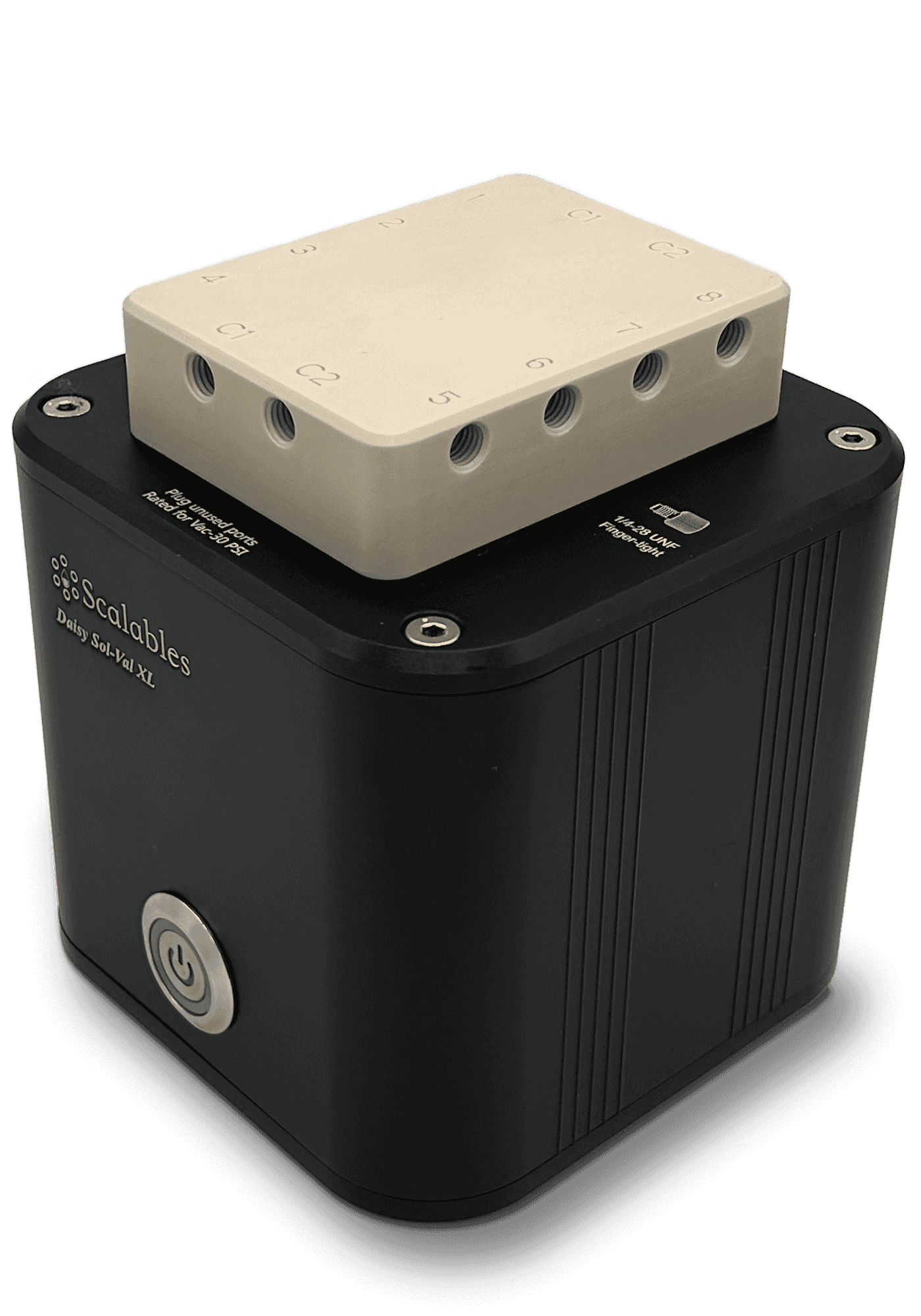
The larger version of the Daisy Sol Val, this module boasts a bigger PEEK manifo...
Select options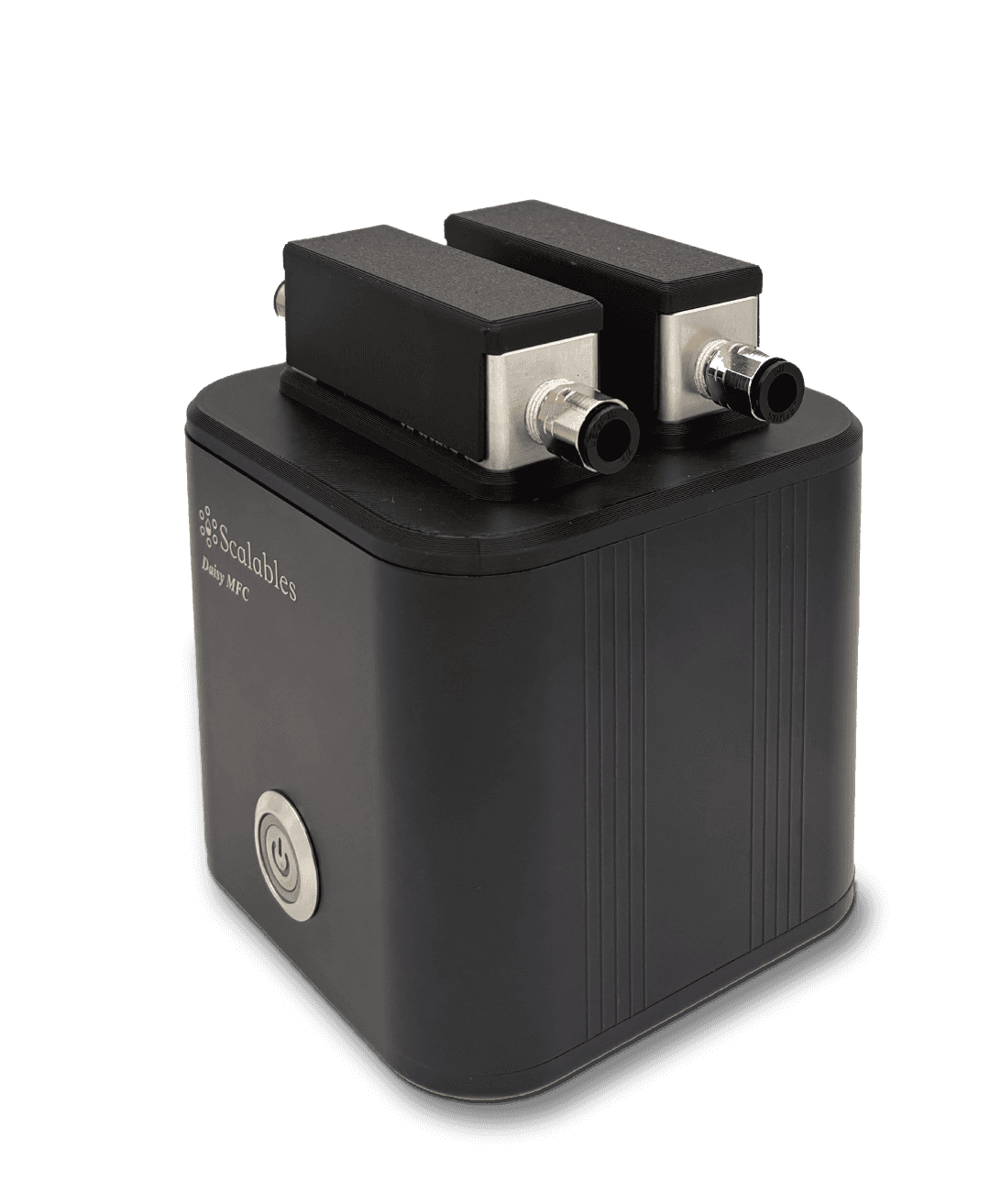
Precise gas flow on two independent channels. The Daisy MFC puts two mass flow c...
Select options